

What is the Mari Lwyd?
At its simplest, and most misleading, the Mari Lwyd has been described as a dead horse’s head on a pole, decorated with ribbons and bells, used to get a free beer.
While this explanation may raise an eyebrow or two, it barely scratches the surface of one of Wales’ most fascinating and enduring folk traditions. The truth is far richer, stranger, and far more compelling.
The Mari Lwyd is a unique and ancient midwinter custom, rooted primarily in South Wales. It was once common throughout Glamorgan, stretching into Gwent, with recorded appearances in parts of Carmarthenshire and even North Wales.
In more recent times, Welsh emigrant communities have carried the tradition even further afield, reviving the Mari in places as distant as the United States and Australia.
The Meaning of the Name
The origins of the name Mari Lwyd, most commonly translated as Grey Mare, are, like much ancient folklore, steeped in debate. For generations, scholars have argued over its true meaning.
Some modern interpretations suggest a connection to Mary, the Virgin Mary. However, this theory sits uneasily with the fact that the Mari’s roots appear to predate Christianity itself.
A more convincing explanation lies within older Welsh belief systems, where horses held deep spiritual significance.
Mythological Roots and Symbolism
The Mari Lwyd is centred around the image of a horse’s skull, a powerful symbol within older understandings of death, rebirth, and the turning of the year. In many traditional belief systems, the skull is not simply a marker of death, but a reminder of renewal, the shedding of the old to make way for the new.
Appearing at midwinter, when darkness begins to give way to light, the Mari Lwyd embodies this moment of transition.
Within Welsh mythology, the horse carries similar symbolic weight. Rhiannon, one of the most significant figures in the Mabinogi, is closely associated with horses and with themes of sovereignty, endurance, loss, and restoration. She is famously depicted riding a white horse, moving effortlessly between worlds, beyond the reach of those who pursue her.
Although Rhiannon is not explicitly named as a horse goddess in surviving medieval texts, her repeated association with the horse and with cyclical transformation has led many scholars to view her as the echo of an older, pre-Christian equine figure.
Seen in this context, the Mari Lwyd can be understood as part of a wider Welsh symbolic tradition in which the horse acts as a liminal creature, standing between life and death, old year and new, the human world and the Otherworld.
The Mari’s winter visit, skull gleaming and ribbons dancing, becomes not something macabre, but a ritual expression of rebirth, continuity, and survival, a tradition that looks forward as much as it looks back.
This interpretation places the Mari Lwyd firmly within a pre-Christian, pagan landscape, where ritual, symbolism, and seasonal transition were central to community life.
Early Records
The name Mari Lwyd first appears in written historical record in 1800, in A Tour Through Parts of North Wales by Reverend Dr John Evans.
The book, now long out of print, provides invaluable insight into how the tradition was already well established by the turn of the 19th century. As the book is now due to its age Copyright free a PDF scan of the original book can be downloaded from our Mari Downloads page.
Midwinter, Rebellion, and Ritual
Traditionally, the Mari Lwyd was carried during the darkest part of the year, from Christmas through to the New Year, and often as late as Hen Galan, the Welsh New Year celebrated around 13 January.
These celebrations predate modern religious holidays by thousands of years. They originate in ancient Celtic festivals marking the turning of the year, the return of light, and the survival of community through winter.
When Christianity spread through Wales, many of these older customs were discouraged or outright banned. In this context, the Mari Lwyd became more than a celebration, it became an act of cultural resistance.
Carrying the Mari was, in part, a quiet revolt against the enforced abandonment of long-held beliefs and traditions. The people persisted, and because they did, the Mari Lwyd survives today.
The Wassailing Tradition
The Mari Lwyd as we recognise her today became firmly embedded within the Wassailing tradition, thought to date back to the 16th century.
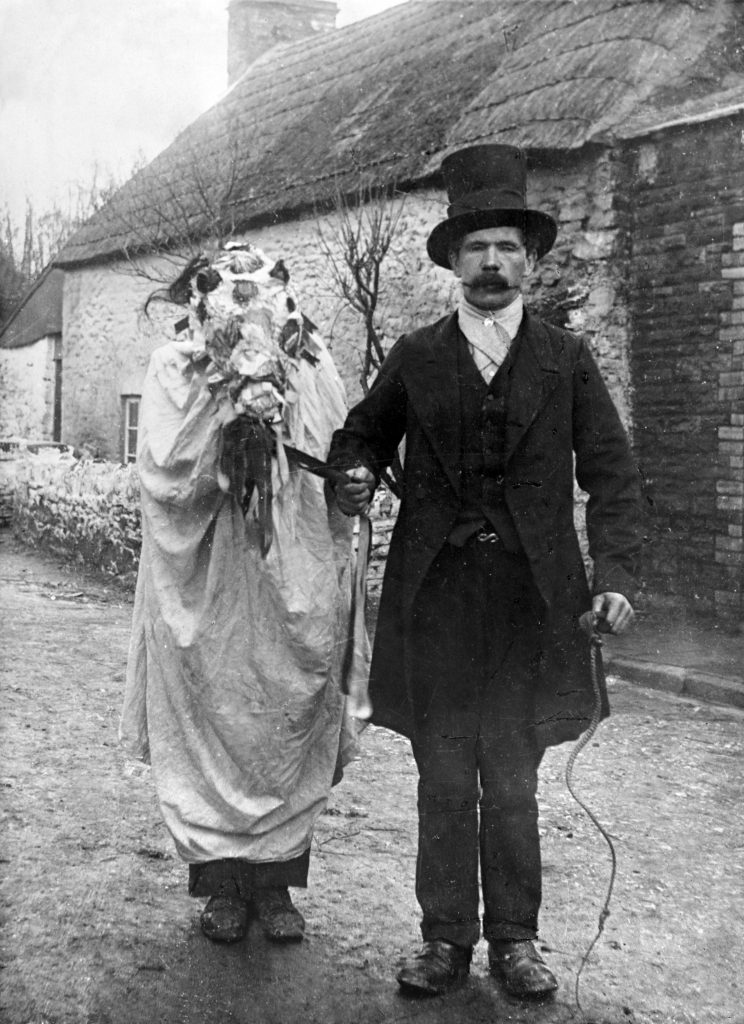
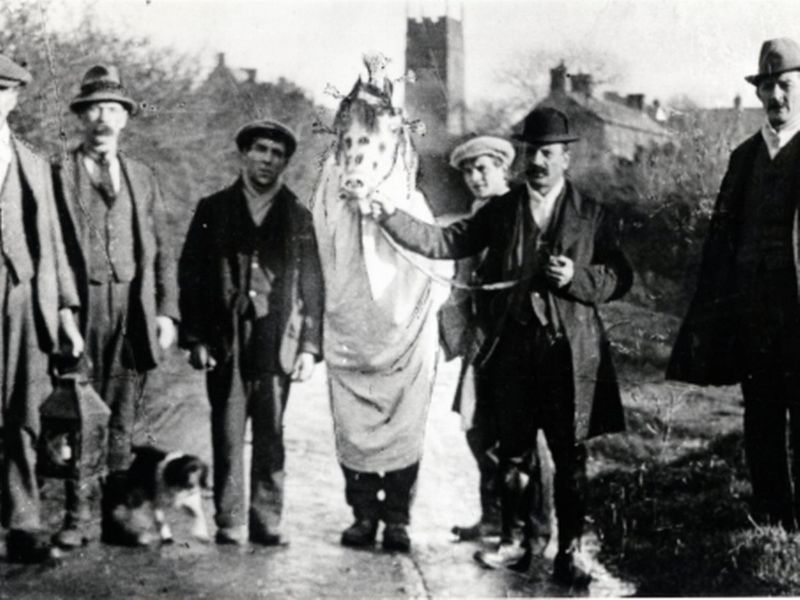
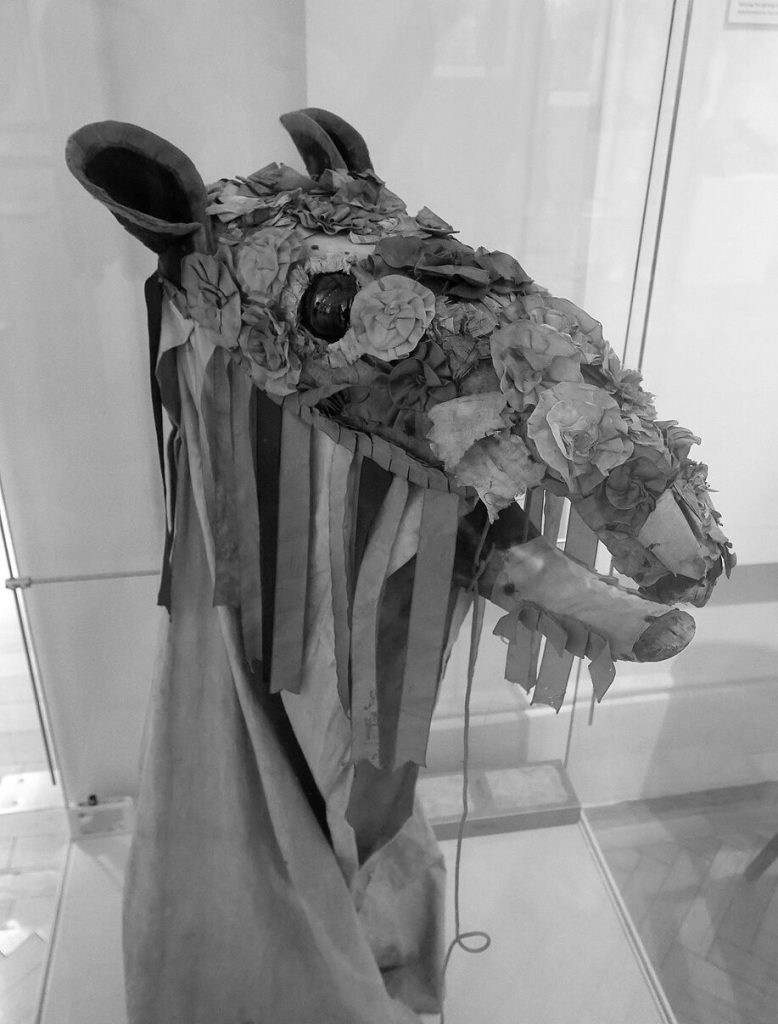
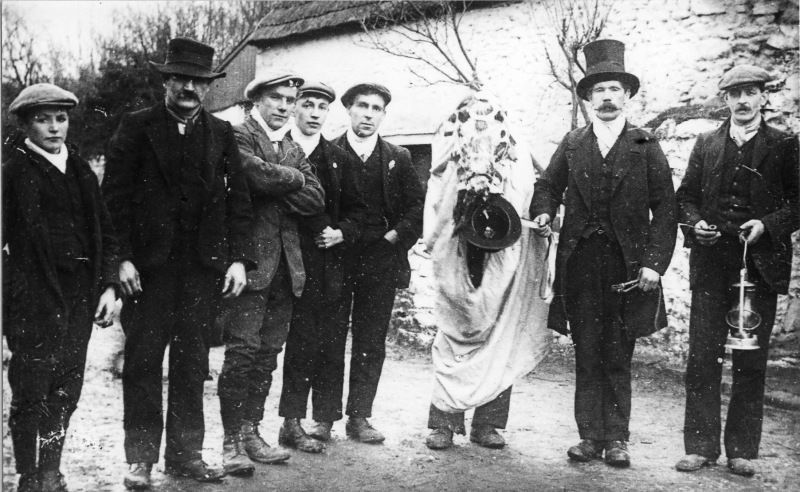
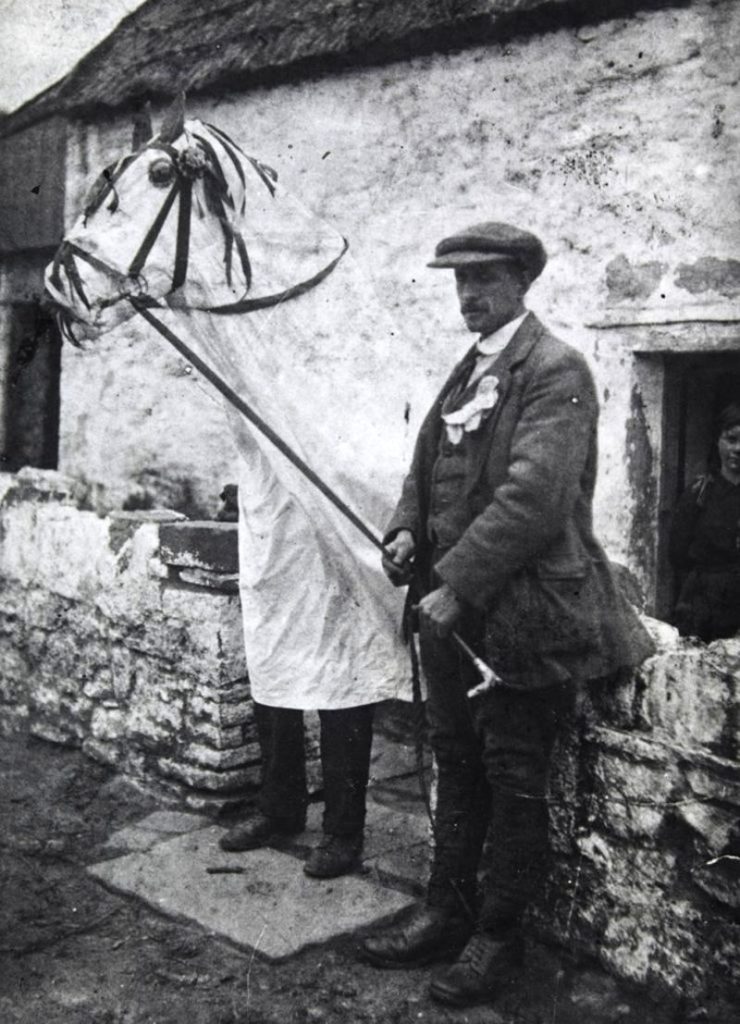
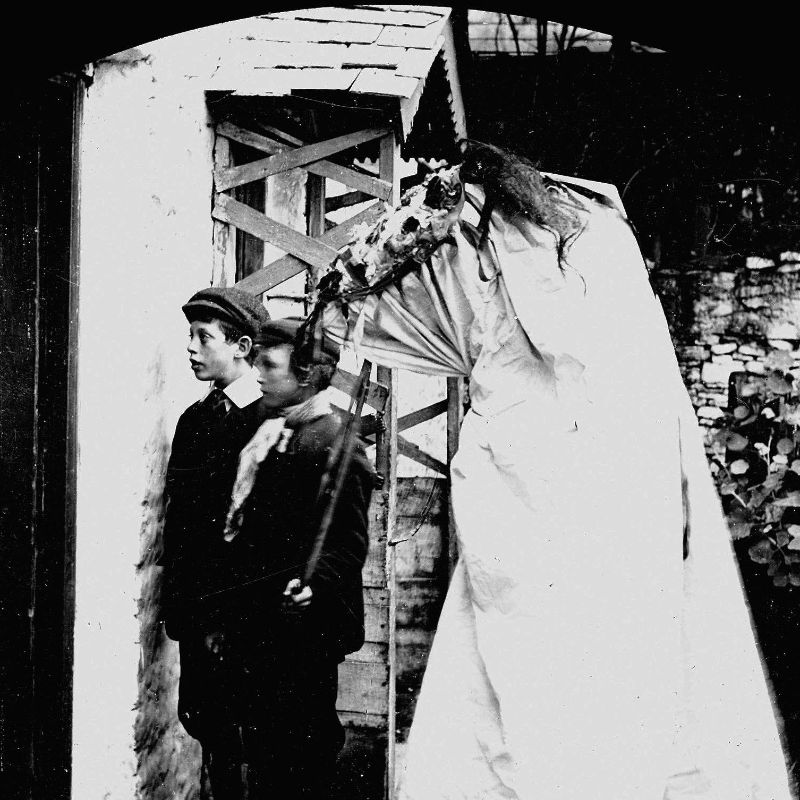
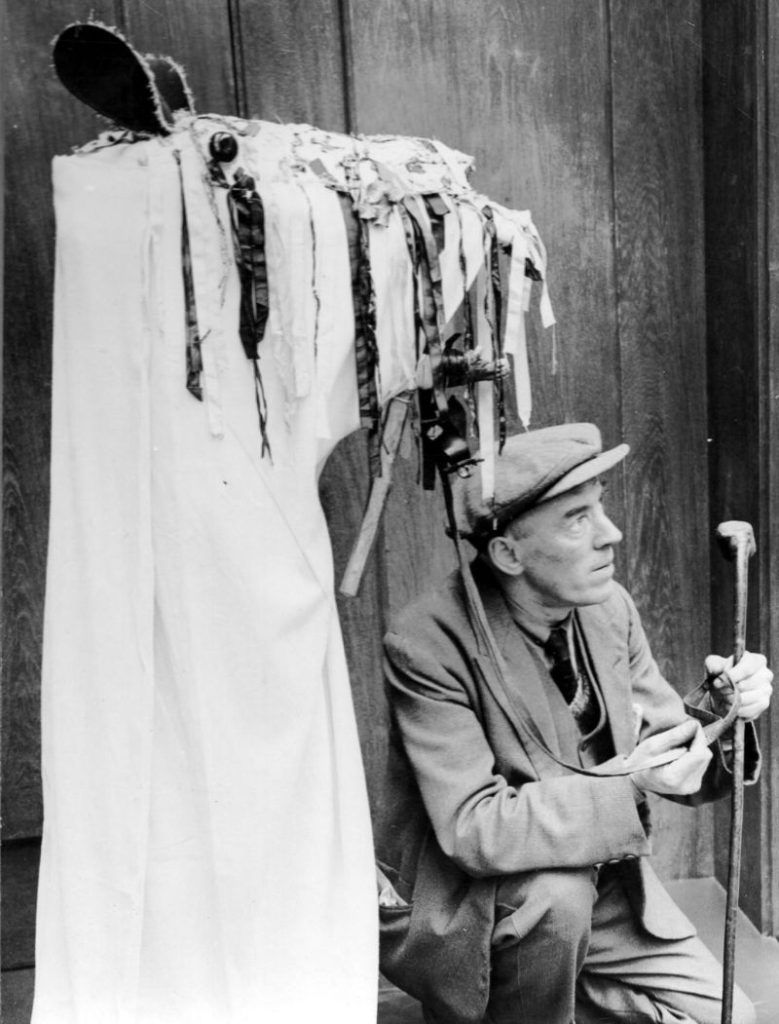
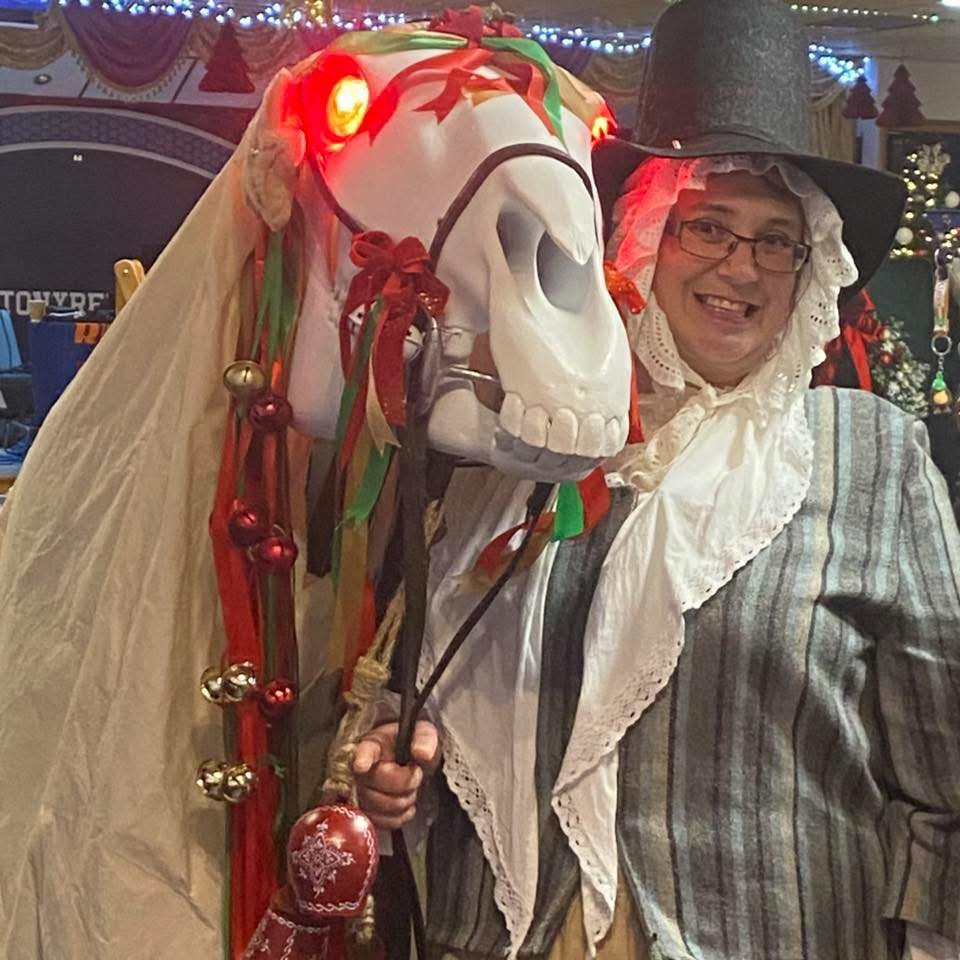
At dusk, a horse’s skull mounted on a pole would be cloaked in a long white cloth to conceal both the carrier and the structure beneath. The skull was decorated with glass or bauble eyes, colourful ribbons, and bells.
As darkness fell, the Mari was carried door to door, and often pub to pub, accompanied by her entourage. She was led by her Ostler, and followed by the Merryman.
The Ostler and the Merryman
The Ostler*, traditionally male, was usually smartly dressed and adorned with ribbons matching those of the Mari. He often carried a staff or whip, similarly decorated, and acted as her handler and spokesman.
The Merryman, by contrast, embraced chaos. Less formally dressed, he played the fool, entertained the crowd, and often provided music. Together, they created a balance of order and mischief, a recurring theme in folk tradition
The word Ostler comes from the Old French hostelier, an innkeeper who cared for travellers and their horses, later evolving into the term for someone responsible for horses. It is a fitting title for the Mari’s guardian.
Pwnco — A Battle of Words, A Traditional Rap Battle!
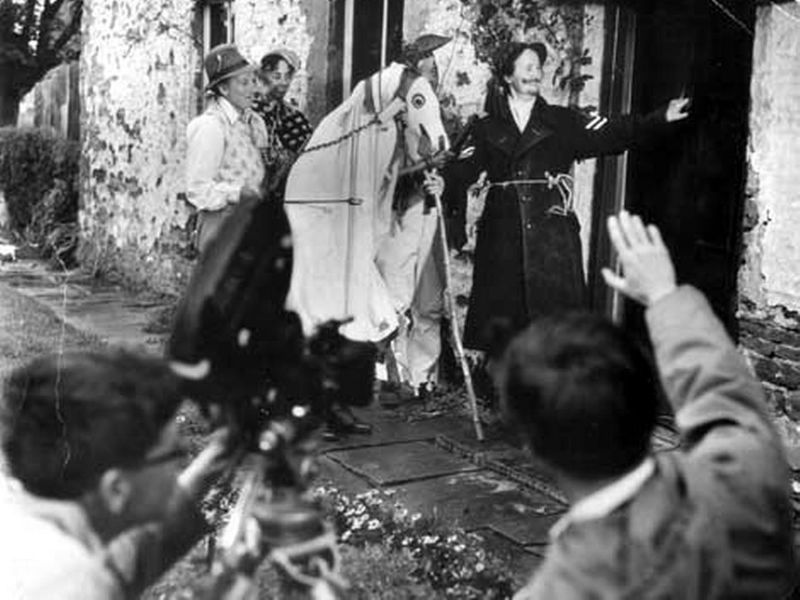
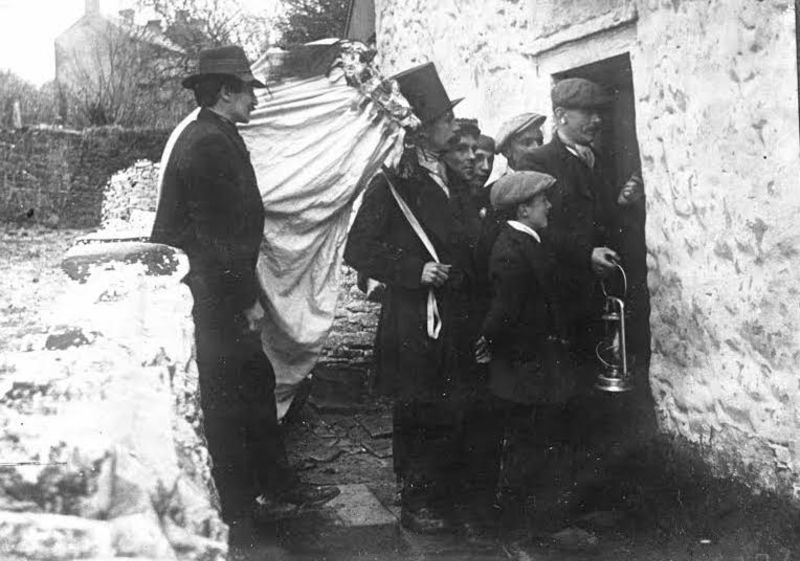
When the Mari arrived at a home, the Ostler would knock, and the ritual of pwnco would begin, a playful but fierce battle of rhyme, song, and wit.
The Mari’s party would sing a verse demanding entry. The householder would respond with a verse refusing. Back and forth they went until eventually the homeowner was outmatched and surrendered, inviting the Mari inside.
Once admitted, the household offered food and ale, and in return received luck and blessing for the year ahead. The belief was simple: to welcome the Mari was to welcome prosperity.
Decline and Revival
From the mid-19th century onwards, the Mari Lwyd began to fade. One contributing factor was the influx of English-speaking migrants into the South Wales coalfields, which weakened the Welsh-language traditions central to pwnco.
The primary cause, however, was religious opposition. Nonconformist denominations, particularly Methodism, which held strong influence in South Wales, condemned the Mari as a pagan, non-Christian practice and actively sought its abolition.
By the mid-20th century, the Mari Lwyd had almost disappeared.
Almost.
A Living Tradition Once More
In the latter part of the 20th century, renewed interest in folklore, history, and Welsh cultural identity sparked a revival. Groups formed in places such as St Fagans, Llantrisant, and Caerphilly, breathing life back into a tradition that refused to be forgotten.
Today, the Mari Lwyd is once again recognised, celebrated, and cherished. Across South Wales, she is no longer a relic of the past, but a living symbol of identity, community, and continuity.
Her future now feels more secure than it has in over a hundred years, and as long as communities continue to welcome her knock at the door, the Mari Lwyd will never truly disappear.